Tuesday, 1 April 2014

THE IMPACT OF COLONIALISM ON OUR POLITICAL SYSTEM[1]


Being a paper delivered by Mayor Ogbonna Ernest Esq., on the Students Environmental Assembly Nigeria National Summit held at Delta State University Abraka from 18th -22nd of March 2014         

The concept and meaning of Colonialism need not be much emphasised anymore, especially in this part of the world, but the impacts it left in Nigeria has been and is still the root of our many problems in this country, and therefore would always remain a topic of discourse.


Firstly, colonialism brought about the unholy and unsolicited union of many and different ethnic nationalities into this one un-working entity called Nigeria. Since this undesired matrimony devoid of any iota of consultation, the problems of Nigeria have continually remained better imagined than analysed.

Prior to colonialism, Nigeria has a smooth sailing political structure and system that soothed and worked perfectly well on our nerves and systems, and everyone accepted his neighbour as his brother. Our traditional systems were good, truthful and efficient. Take for instance, in the Eastern part of Nigeria, there was a working system that, if you do any evil in the society and deny it, you would be taken to the shrine to swear to an oath and if you lied you would pay dearly for it. The fear of death made people eschewed evil. But today it is a different story because our traditional systems have been destroyed and substituted with one system that we are forcing ourselves to update every day, and to adapt to.

For the purpose of this paper, the impacts of colonialism can be seen in the following pictures-
1.     DESTRUCTION OF OUR NATIVE SYSTEMS- Before the coming of the white man into this country, our traditional rulers were seen as the height of honesty and justice. The native system was seen as belonging to the rich and poor, but today it is for the rich alone, the traditional system is no longer trusted, our traditional leaders are now the best-selling commodity thatonly the rich can afford, traceable to their incorporation into the white man’s system of leadership during the colonial rule. Our traditional leaders are now more of praise singers who are more interested in where and who would give them monies and no longer how to dispense just and equitable leadership. Money politics is now the order of the day and justice has gradually been pushed into the desert.
2.     NEO-COLONIALISM- This is another form of indirect colonialism. It simply says that we have colonised you, given you independence, but we will continue to colonise your economy, political life and every other aspect of your national life through policies and other indirect forms. The most painful aspect of Nigeria’s case is that in neo- colonialism, it is always the country that colonised the other country that still engages in neo colonialism of the later country, but in Nigeria’s case, it is a different thing. We are being neo-colonised by Britain, USA, China, etc.
According to Kwame Nkrumah of Ghana, “The Neo-colonialism of today represents imperialism in its final and perhaps its most dangerous stage. In the past it was possible to convert a country upon which a neo-colonial regime had been imposed into a colonial territory (e.g. Egypt in the 19th C). Today this process is no longer feasible. Old fashioned colonialism is by no means entirely abolished. It still constitutes an African problem……. The essence of neo-colonialism is that the state which is subject to it is, in theory, independent and has all the outward trappings of international sovereignty. In reality its economic system and thus its political policy is directed from outside.”
Neo-colonialist control can be exercised in many forms and shapes, but it is most often exercised through economic and or monetary means, especially in Africa. This is obvious by the fact that the western world often creates so many problems for us and turns around to give us financial aids to solve such problems. This in-turn ensures our dependence on them. More so, it is no longer news that the USA and other western powers are interested in the decisions we make (to ensure that they influence it to favour their whims and caprices), in our politics and elections (to ensure that they implant who would be easily driven by them). Many often had the United States threatened to withdraw financial aids to Nigeria if certain policies and decisions are not allowed to go the U.S way. The anti-gay law is a recent example of how the US indirectly determines and wants to continually determine the decisions made by Nigerian government. The result of neo-colonialism is that foreign capital is used for the exploitation rather than for the development of the less developed parts of the world. Investment under neo-colonialism increases rather than decreases the gap between the rich and the poor countries of the world. Therefore, when the rich countries of the world announce the financial investments they make in the developing countries, it is never for free as they give a dime with one hand and take ten dollars in return with the other hand, while making us dependent on their whims and caprices as guide to better future for our country and continent. Countries like South Africa and Libya took their destinies in their hand and our story in Nigeria is nowhere near their in the comity of nations.
3.     MORAL BANKRUPTCY- The degree of moral decadence in Nigerian system has led to the increase in corruption, insecurity and many social vices in the society. Religion has brought us many good things but it is not devoid of evil. The terrorism which Nigeria has been going through in many years now is rooted in love for religion more than love for humanity. The proliferation of churches and mosques and their uses in dubious acts that destroy our economy and system cannot be over-emphasised. This was not the case in pre-colonial Nigeria. This is not far from the reason why our elections are bloody and our governments corrupt. Once you have a political god-father you are sure of political position whether or not you are voted for. This was not the case in pre-colonial Nigeria where fairness and uprightness were the guiding principles in the society.

It would be recalled that before the colonial era, we had the emirs, obas, and the chiefs. There was no political violence and unrest because even if one oba or emir or chief dies or vacates the offices the successor was already known and there was no controversy about it neither did people had to kill and main their opponents in the name of occupying the position. But today, People like Chief Bola Ige, Funsho Williams to mention a few are nowhere to be found because some persons felt that they posed a threat to one of their political interests or the other. Today, kidnappings have become part of our political system without caring about our moral values anymore. The measurement of morality these days is how many times you attend the church activities and how fluent you are in the mosque to pray, all thanks to what we learnt from colonialism.


[1] Being a paper delivered by Mayor Ogbonna Ernest Esq., on the Students Environmental Assembly Nigeria National Summit held at Delta State University Abraka from 18th -22nd of March 2014

Monday, 24 March 2014

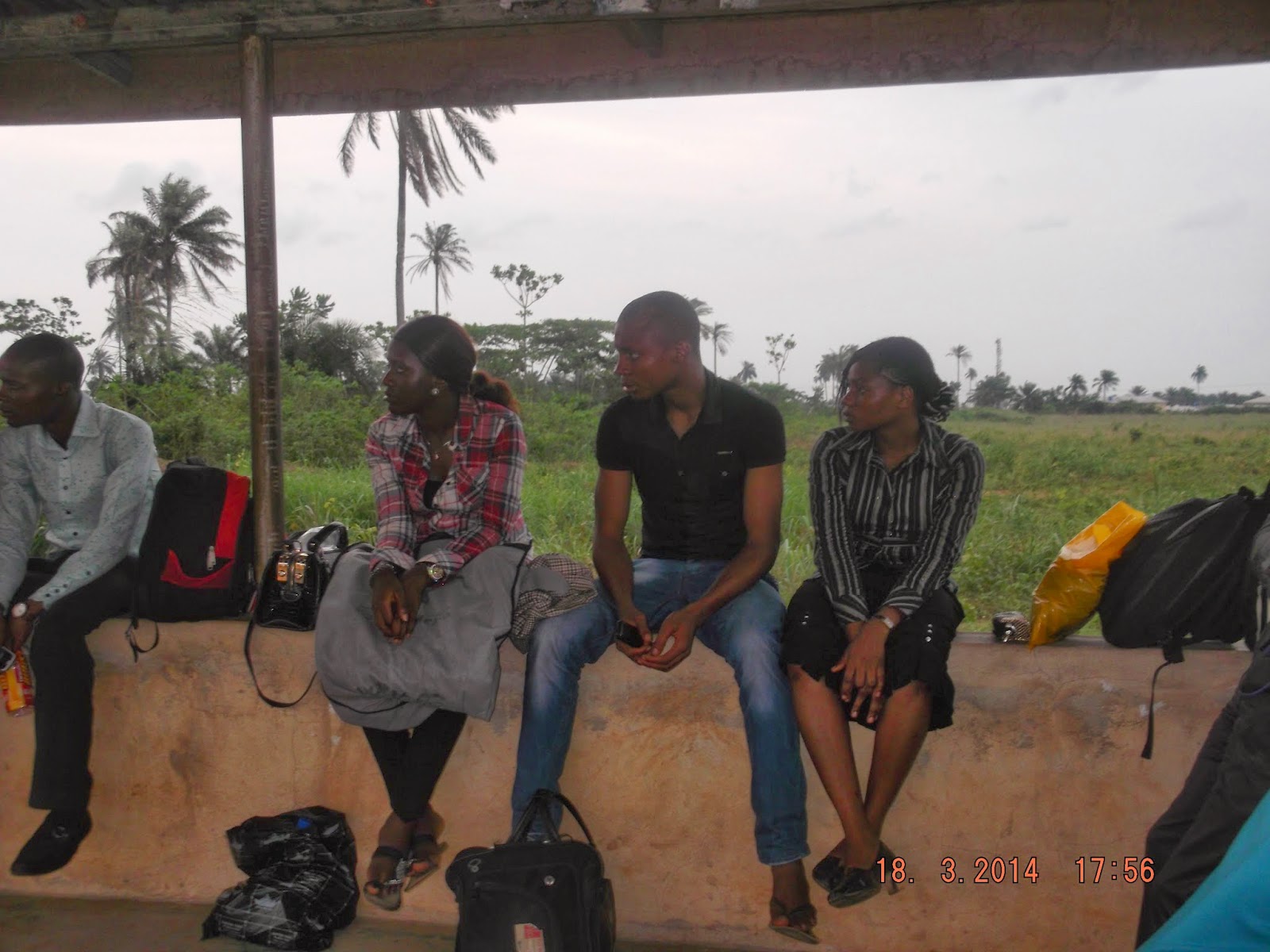
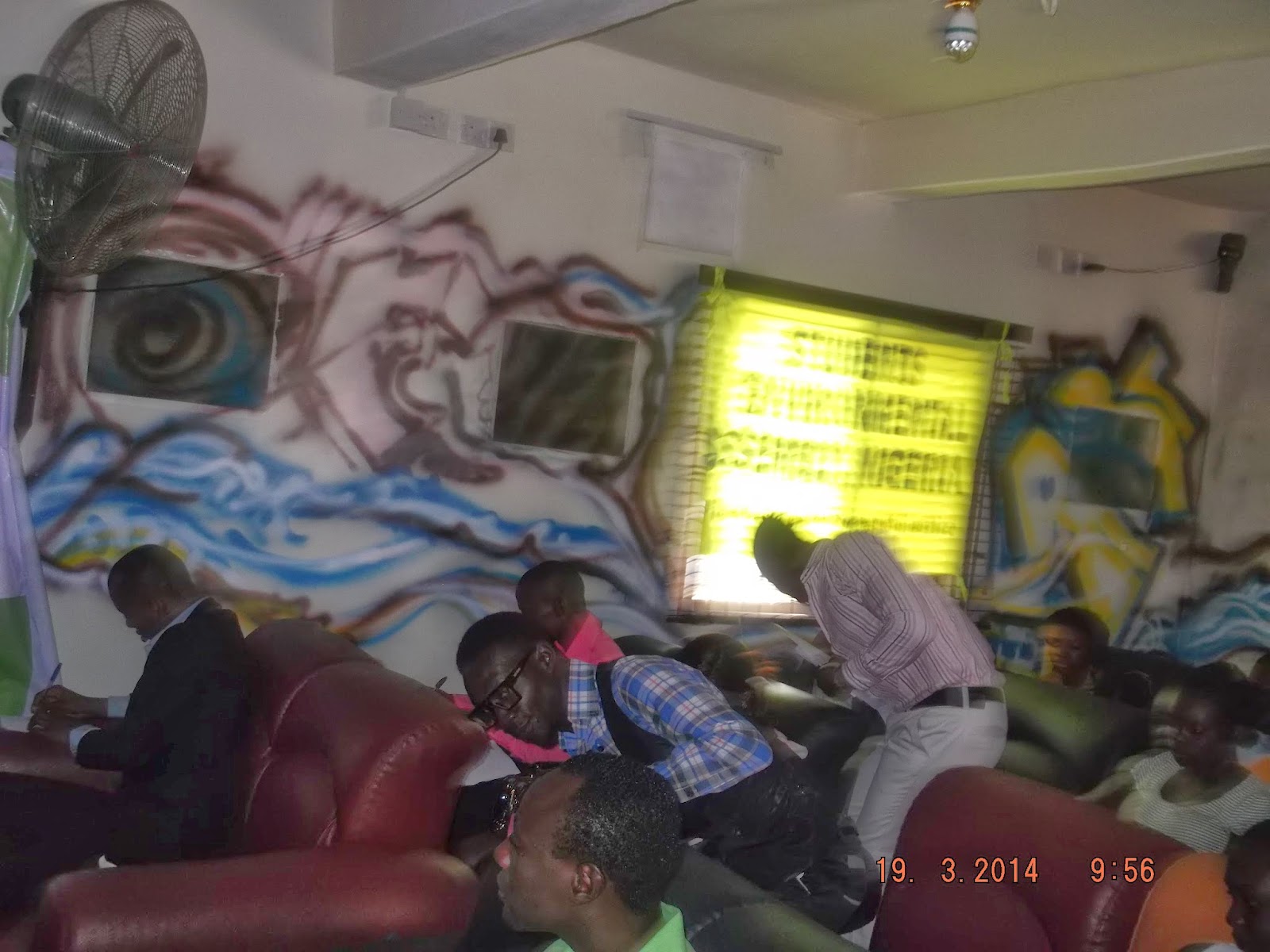
Photos from SEAN Summit


SEAN ELECTS NEW NATIONAL EXECUTIVES


Students Environmental Assembly Nigeria a student’s oriented environmental organization who primarily focuses on Nigerian tertiary institutions with the aim of empowering students to become the ultimate champions for environmental justice met on Wednesday 19th March, 2014, to hold her 1st National Environmental Summit.


During the summit held at the Delta State University Abraka, members elected new national executive officers to take over from the outgoing executives which assumed office on November, 2011 in Benin City, Edo State.

The summit with the theme “movement building and youth action for environmental defense” brought together student leaders from 19 tertiary institutions in Nigeria.

The summit is geared towards students (youths) mobilization in institutions of higher learning with the aim of strengthening the SEAN platform, train selected student leaders on the critical environmental issues in Nigeria especially on climate change, and to encourage the trained ones to step down those trainings in their various campuses to empower other youths to understand the nature of environmental degradation on their environment and prepare them to champion the cause for a better environment. The remaining activities to be embarked upon in this summit include general workshop and exchange visit (Field trip) to some oil spill sites in the Niger Delta.

This assembly has just shown a good example of true democracy, by electing new executives at the appropriate time as stipulated in our constitution. If other students and youths organizations can practice true democracy it will transform the youths in making good future leaders for our great nation.
The outgoing executives of Students Environmental Assembly Nigeria under the leadership of MAYOR OGBONNA ERNEST which took over office from UBREI-JOE MAIMONI MARIERE in 2011, a then 500L Environmental Science Technology Student at the Delta State University Abraka has come to an end today. The belief of SEAN is to give birth to future leaders who will put the environment as first in the scheme of things. 

While handing over the mantle of leadership, the outgoing national coordinator said, Since assuming office in 2011, we have been able to set up SEAN in 19 tertiary institutions. Our ideas have positively affected a good number of students at their various campuses, whereby students can at this point identify their rights and fight for them”. “Cultism and corruption is the main problem facing youth development, for not engaging in meaningful ideals and practices. In recent times we realized that the population of cultism and corruption on the path of the youths is increasing at an alarming rate. The activities of the Students Environmental Assembly Nigeria on campuses have been able to curb some of these issues in some institutions, at this point we want to urge Nigerian youths to engage themselves in the activities that will help them keep away from cultic activities and corrupt practices and engage in environmental friendly activities”.

We congratulate and urge the new national executives under the leadership of Comrade ABANG FREDRICK EJUE, to build on the strong structures we have built, and to ensure that the idea of the assembly spreads to other institutions where this idea has not reached. Where good democracy is practiced every executive must correct the mistakes of the past leaders and build on the strong structure of the past executives”.

Responding after taking over, the national coordinator assured that “with the dream at hand, we hope to build an understanding in our youths and students that the environment is ours to govern and protect towards ensuring sustainable development. Where this is successfully inculcated in our youths, we must have succeeded in ensuring a better environment for ourselves and the future to come”. “We therefore appeal to and encourage our youths and parents to support this awakened consciousness in our youths to say no to environmental injustice and violation.

Members of the new executive are:
1.      Mr. ABANG Fredrick Ejue                         Coordinator (CRUTECH)
2.      Miss. ENYINNAYA Melody                               Dep. Coordinator (FUPRE)
3.      Miss. ABUSI Dabota                                   Sec. general (CRUTECH)
4.      Mr. IGBOJIANYA George Obinna                 Assist. Sec. general (UNIBEN)
5.      Mr. TITIGBE Onyekachi Venath           Environmental campaigner in- chief (DELSU)
6.      Mr. NWAOGBE Daniel                     Assist. Environmental campaigner in –chief (COE ABUJA)
7.      Miss. PETERS Ifeoma Lilian                         Financial secretary (ATBU)
8.      Miss. UNEM Victoria                         Programme/Social and Welfare Director (UNN)
9.      Mr. BISONG Takang                                        Assist. Financial Secretary                           

Titigbe Onyeka Venath
For SEAN National Secretariat.
+2347032459923

Saturday, 15 March 2014

Students Environmental Assembly Nigeria, SEAN Demands: No Oil Exploration in the Norwegian Arctic

Sir,
This week 400 youth from all over the world are gathering in the high north of Norway to demand that Norwegian authorities protect the pristine areas outside the Lofoten Islands against oil and gas exploration. Among them is Student Environmental Assembly Nigeria from Environmental Rights Action/Friends of the Earth Nigeria.

Norway is seen by many to be a leader among industrialized nations in the process towards a just and effective international climate change agreement. However, the Scandinavian country does not practice what it preaches. The country’s high per capita emissions is because of the ever growing oil and gas exploration in the country, and for the last twenty years the oil industry has been pushing for a opening of one of the worlds most vulnerable areas, the areas outside the Lofoten Islands. If the Norwegian government were to open the area for oil exploration, they will defy all environmental concerns, the majority of the Norwegian population and the last shred of climate leadership will be stripped from Norway.

If Norway, as one of the richest countries in the world, were to show that not even the valuable and unique areas of the Lofoten-islands are “off limits” for the oil and gas industry, it would set a disappointing precedent internationally, says Babawale O.Obayanju, media and IT officer with Environmental Rights Action/Friends of the Earth Nigeria.

If the world is to be effective in preventing dangerous climate change, a large portion of the available fossil fuels needs to be left in the ground. In this situation, avoiding oil and gas activity in some of the world’s most sensitive and biodiversity rich ecosystems should be an easy choice. The pristine areas offshore of the Lofoten Islands archipelagos in the Norwegian Arctic are among these valuable ecosystems. The area holds unique cold-water reefs, pods of sperm whales and killer whales, some of the largest seabird colonies in Europe as well as being the spawning grounds of the largest remaining cod stock in the world.
As we have seen with the BP spills in 2010, when oil spills occurs in areas offshore (which in many cases are inevitable) the destruction thereof is disastrous to the people and the ecosystems.

Students Environmental Assembly Nigeria supports the call of local fisheries organizations and environmental groups for these areas to be protected from the risks and emissions associated with oil and gas activity. We call on the parties running for parliament elections to take a firm stand in this issue – do not allow the opening of the Norwegian Arctic for oil and gas drilling!

During the following week 400 young people from all over the world are setting camp in a small fishing village in Lofoten. Adesuwa Uwagie-Ero, Ubrei-Joe Maimoni, Tititgbe Venath and Mayor Ogbonna from Student Environmental Assembly Nigeria are looking forward to meeting other young environmentalists from across the globe and exploring all this unique region has to offer. Throughout the week they will share their Nigerian experiences with the oil industry and participate in lectures on dirty energy and the solutions on the climate crisis, training for direct, not violent, actions to stop potential exploration rigs heading north, as well as a big rally in Lofoten on Saturday the 3rd of august. Here, all de parties running for parliament election will debate the future of the Lofoten-islands.

For more information and further comments, please contact:
Babawale Obayanju,
Project Officer,Media and IT
Environmental Rights Action/Friends of the Earth Nigeria
waleseun@eraction.org
Silje Lundburg President Natur og Ungdom/ Young Friends of the Earth Norway
Email: siljel@nu.no

Friday, 14 March 2014

SEAN set for Environmental Action Summit


As part of efforts to create environmental consciousness among young people in institutions of higher learning in Nigeria, the Students Environmental Assembly Nigeria (SEAN), is set to organize a National Environmental Summit which is aimed at empowering young people to become the ultimate champions for environmental justice.


Add caption

In a statement by Ubrei-Joe M. Mariere, officer coordinating the group for Environmental Rights Action/Friends of the Earth Nigeria (ERA/FoEN), the summit which has as its theme “movement building and youth action for environmental defense” will hold 19-21 March, 2014 the Delta State University, Abraka. This summit is supported by ERA/FoEN.

SEAN is a student oriented environmental organization with its primary focus on Nigeria tertiary institutions to empower students to become the ultimate champions for environmental justice. The organisation seeks to mobilize students for the environment and empower them to become the ultimate champions for environmental justice, work towards achieving an environment befitting of the future leaders of our great country, generate campaigns and carryout activities which will help the society as well as improve the understanding and preservation of nature, educate and encourage research among students on the environmental situation of their immediate environment and demand for the protection of vital environmental resources which students must enjoy when they cease to be students.

SEAN currently exists in 19 higher institutions in Nigeria. They are Delta State University, University of Benin, University of Lagos, University of Nigeria Nsukka, University of Calabar, and Cross River State University of Science and Technology. Others are School of Health Technology Calabar, River State University of Science and Technology, University of Jos, College of Education Zuba, Abia State University, Federal University of Petroleum Resources Effurun, and Federal University of Technology Minna. There are chapters also at the Ambrose Ali University, Ekpoma, Auchi Polytechnic, Niger Delta University, Delta State Polytechnic Ozoro, Delta State Polytechnic Ogwasi-Uku and University of Port-Harcourt. Participants will come from the 19 chapters.

Ubrei-Joe said that the summit is geared towards students (youths) mobilization in institutions of higher learning with the aim of strengthening the SEAN platform, to train selected student leaders from the various institutions of higher learning on the critical environmental issues in Nigeria especially on climate change, and also for the trained ones to step down those trainings in their various campuses who will empower other youths to understand the nature of environmental degradation on their environment and prepare them to champion the cause for a better environment. He also stated that the activities to be embarked in this summit include two days Workshops and Field trip to oil spill sites in the Niger Delta.
Some of the speakers participating at the National Environmental Summit include: The Head of Legal Resources Department of Environmental Rights Action/ Friends of the Earth Nigeria, Barr. Chima Williams, Prof. D.F Tom, Dean Faculty of Law Delta State University Oleh Campus, Prof. (Mrs) O.M Agbogidi, Head of department of Botany Delta State University, Abraka, Mr. Babawale Obayanju, Project Officer Media Relation of Environmental Rights Action/Friends of the Earth Nigeria, Dr. Tony Akpoborie, Dr. Elo Ibagere, Dr (Mrs) Agaire, Mr. Richard Benin and lots more.

The group believes that the youths have both special concerns and special responsibilities in relation to the environment. A number of environmental risks and hazards disproportionately affect young people, who have to live for an extended period with the deteriorating environment bequeathed to them by earlier generations. The problem of environmental degradation in Nigeria has risen as a result of lack of discipline on the path of the extractive industries such as SHELL,ENI/AGIP, EXXON MOBIL, and CHEVRON etc. The Nigerian environment is therefore threatened largely by man-made disasters. Many years ago, an average young man would engage on any available practice to eke out a living, without giving a thought to the impacts of his actions on both the environment and the climate. In this summit young people will be empowered to engage in new forms of action and activism that will generate effective responses to ecological challenges. Trainings and capacity building workshops have helped us in awareness creation in institutions of higher learning and communities where youth are important instruments and actors for development.


Tuesday, 10 December 2013

20 YEARS WORKING FOR YOUR RIGHTS.

On the occasion of the World Human Rights Day today, December 10, the Environmental
Rights Action/Friends of the Earth Nigeria (ERA/FoEN) has advocated that the Federal
Government anchors human rights promotion on sustainable policies that guarantee
protection of livelihoods and social security of Nigerians. 

Every year starting December 10, 1950, the United Nations has marked the Human
Rights Day to bring to the attention governments and ‘of the peoples of the world’
the Universal Declaration of Human Rights as the common standard of achievement for
all peoples and all nations.
The theme of the 2013 event is 20 Years Working for Your Rights, re-emphasizing
again the thrust of the Vienna Declaration and Programme of Action, adopted by the
World Conference in 1993, which marked the beginning of a renewed effort in the
protection and promotion of human rights. The declaration is regarded as one of the
most significant human rights documents of the past quarter century.
In a statement issued in Lagos yesterday, ERA/FoEN Executive Director, Godwin Ojo
said that: “The global commemoration of the World Human Rights Day should be a
wake-up call for the Nigerian government to go beyond mere lip service to actually
taking the issue of social security and livelihoods protection as pivots to
guaranteeing the wellbeing of all classes of Nigerians”.
Furthermore, Ojo said: “We are not happy that though Nigeria subscribes to
international laws that guarantee human rights right, yet it has failed to address
cases of ecocide in the Niger Delta, inequalities  and environmental and human
rights abuses that have left our people disillusioned”.
“As a critical suggestion to government to address the inequalities, ERA/FoEN is
proposing a National Basic Income Scheme (NaBIS) as a social security of about
N10,000 to be paid to all Nigerians who are unemployed. This initiative will not
only uphold human dignity, reduce poverty, and unlock creative potentials for the
generation of employment opportunities, it will reduce crime currently ravaging in
our society and threatening its fabrics.”
“Our argument is further strengthened by the fact that the Vienna Declaration posits
that the human person is the central subject of human rights and fundamental
freedoms, and consequently should be the principal beneficiary and participate
actively in the realization of these rights and freedoms”.
“We insist that the Nigerian government must go beyond sloganeering the issue of
human rights to adopting the NABIS and initiating policies that ensure that the
promotion and protection of all human rights and fundamental freedoms are a
priority.
“The 2013 World Human Rights Day presents another opportunity for the Nigerian
government to halt policies that are not pro-people and have led to massive
disillusionment across the land. It is now time to empower our people and give them
a sense of dignity. Social security is the way to go,” he insisted.