Monday, 14 April 2014

Summary of SEAN National summit Report


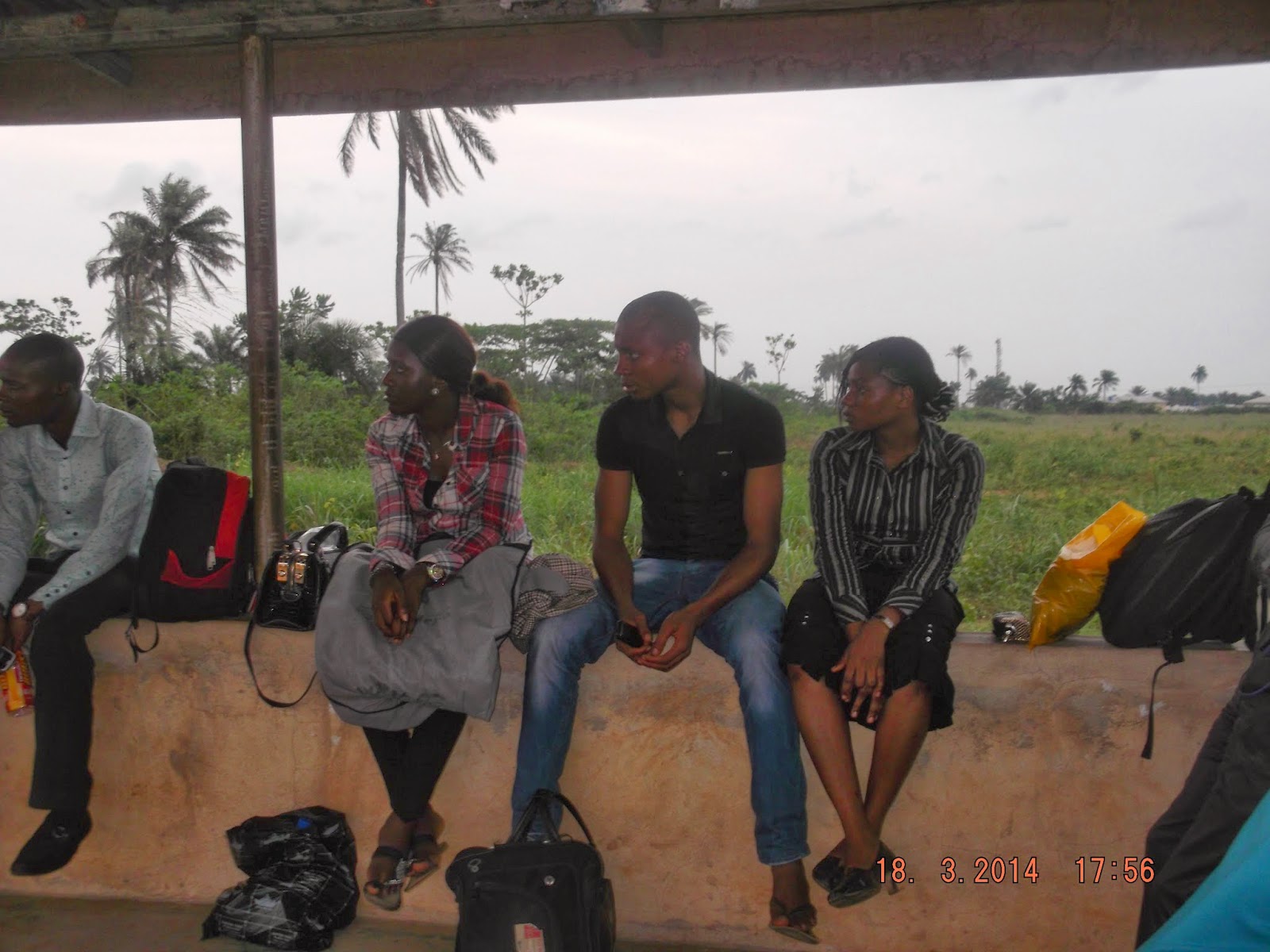
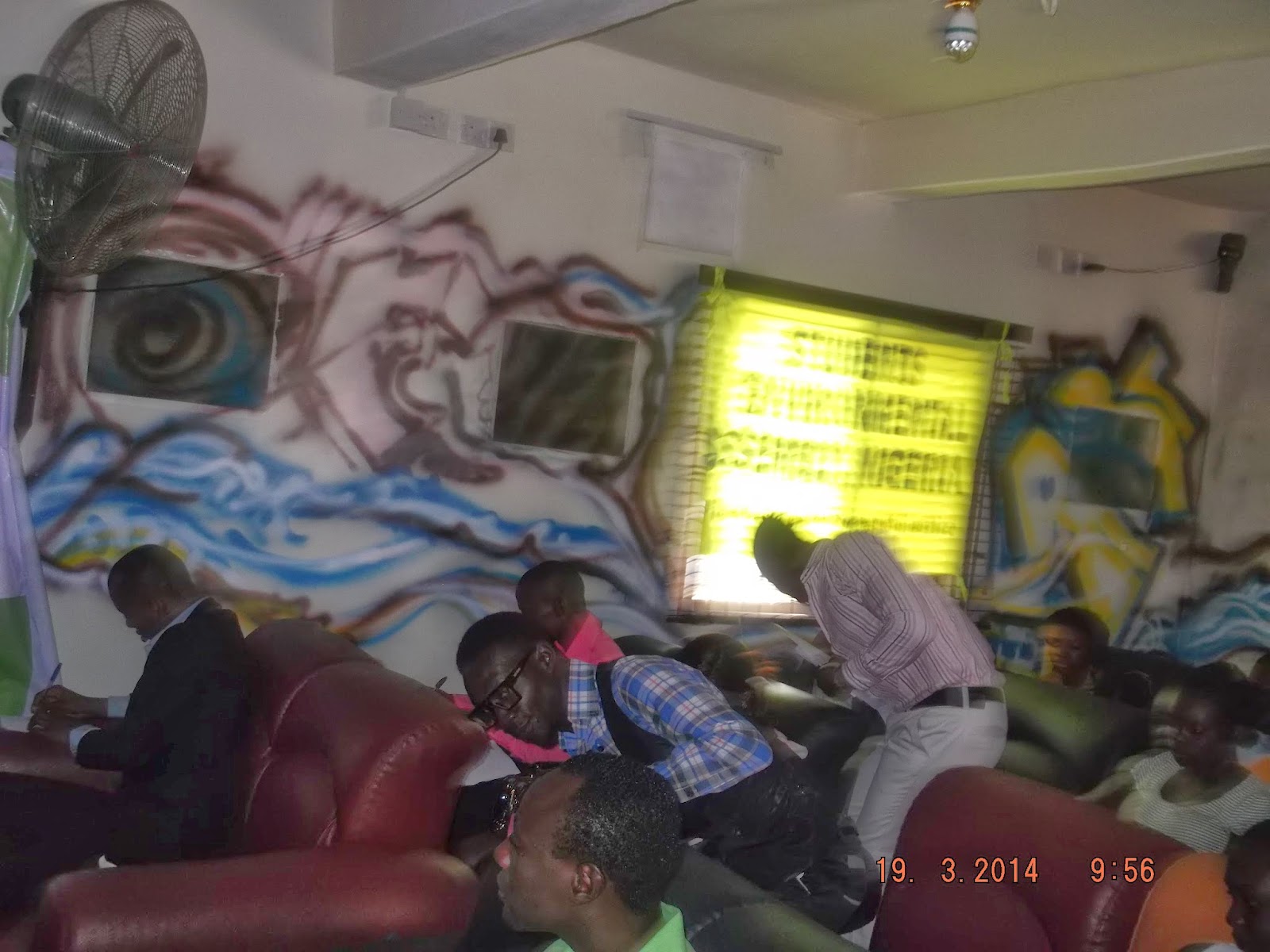
Students Environmental Assembly Nigeria organized a successful National Environmental summit with the theme “Movement Building and Youth Action for Environment” that ran for four days and the summit started from the 18th -21st of March, 2014. Participants were drawn from 19 tertiary institutions of higher learning from across the country and Resources persons were made up of collection of people from Civil Society Organization and Academics sector. The total participants that participated in the said four days summit amounted to about 100. Flowing from the theme of the programme, the topics discussed were carved from the concept of movement building, environmental protections and campaigns for environmental justice as well as examining the implication of colonialism on different sectors in Nigeria.


As part of the lined up activities for the summit that had its main agenda as movement building and youth action for environmental defense, election for the National body was held and the elected Officials have been saddled with the responsibility of expanding the network and empower others to further spread the campaign for environmental justice. As part of the aimed outcome from this project was to draw up an action plan that will cover a period of two years that will help the elected Officers to achieve the aim of the summit which is to build a movement of young people.

The elected Officers and other members of SEAN making a total number of 35 persons were taken to the field at Ogoniland (Bodo and Goi) to have practical experience of the environmental justice campaign. At the field in ogoniland some of the communities’ chief (s) in the two communities visited briefed the students about the sad experience of the extraction of black gold called crude oil in their immediate environment.

This project was successful because all the set goals were met. The number one goal was to renew the leadership structure of SEAN. The second goal was to produce a movement building handbook for the youth group and then produce this report. We highly recommend youth involvement in environmental advocacy and decision making and also the urgent implementation of the UNEP report. We also stand on the ground that oil should be left in the soil.

Tuesday, 1 April 2014

THE IMPACT OF COLONIALISM ON OUR POLITICAL SYSTEM[1]


Being a paper delivered by Mayor Ogbonna Ernest Esq., on the Students Environmental Assembly Nigeria National Summit held at Delta State University Abraka from 18th -22nd of March 2014         

The concept and meaning of Colonialism need not be much emphasised anymore, especially in this part of the world, but the impacts it left in Nigeria has been and is still the root of our many problems in this country, and therefore would always remain a topic of discourse.


Firstly, colonialism brought about the unholy and unsolicited union of many and different ethnic nationalities into this one un-working entity called Nigeria. Since this undesired matrimony devoid of any iota of consultation, the problems of Nigeria have continually remained better imagined than analysed.

Prior to colonialism, Nigeria has a smooth sailing political structure and system that soothed and worked perfectly well on our nerves and systems, and everyone accepted his neighbour as his brother. Our traditional systems were good, truthful and efficient. Take for instance, in the Eastern part of Nigeria, there was a working system that, if you do any evil in the society and deny it, you would be taken to the shrine to swear to an oath and if you lied you would pay dearly for it. The fear of death made people eschewed evil. But today it is a different story because our traditional systems have been destroyed and substituted with one system that we are forcing ourselves to update every day, and to adapt to.

For the purpose of this paper, the impacts of colonialism can be seen in the following pictures-
1.     DESTRUCTION OF OUR NATIVE SYSTEMS- Before the coming of the white man into this country, our traditional rulers were seen as the height of honesty and justice. The native system was seen as belonging to the rich and poor, but today it is for the rich alone, the traditional system is no longer trusted, our traditional leaders are now the best-selling commodity thatonly the rich can afford, traceable to their incorporation into the white man’s system of leadership during the colonial rule. Our traditional leaders are now more of praise singers who are more interested in where and who would give them monies and no longer how to dispense just and equitable leadership. Money politics is now the order of the day and justice has gradually been pushed into the desert.
2.     NEO-COLONIALISM- This is another form of indirect colonialism. It simply says that we have colonised you, given you independence, but we will continue to colonise your economy, political life and every other aspect of your national life through policies and other indirect forms. The most painful aspect of Nigeria’s case is that in neo- colonialism, it is always the country that colonised the other country that still engages in neo colonialism of the later country, but in Nigeria’s case, it is a different thing. We are being neo-colonised by Britain, USA, China, etc.
According to Kwame Nkrumah of Ghana, “The Neo-colonialism of today represents imperialism in its final and perhaps its most dangerous stage. In the past it was possible to convert a country upon which a neo-colonial regime had been imposed into a colonial territory (e.g. Egypt in the 19th C). Today this process is no longer feasible. Old fashioned colonialism is by no means entirely abolished. It still constitutes an African problem……. The essence of neo-colonialism is that the state which is subject to it is, in theory, independent and has all the outward trappings of international sovereignty. In reality its economic system and thus its political policy is directed from outside.”
Neo-colonialist control can be exercised in many forms and shapes, but it is most often exercised through economic and or monetary means, especially in Africa. This is obvious by the fact that the western world often creates so many problems for us and turns around to give us financial aids to solve such problems. This in-turn ensures our dependence on them. More so, it is no longer news that the USA and other western powers are interested in the decisions we make (to ensure that they influence it to favour their whims and caprices), in our politics and elections (to ensure that they implant who would be easily driven by them). Many often had the United States threatened to withdraw financial aids to Nigeria if certain policies and decisions are not allowed to go the U.S way. The anti-gay law is a recent example of how the US indirectly determines and wants to continually determine the decisions made by Nigerian government. The result of neo-colonialism is that foreign capital is used for the exploitation rather than for the development of the less developed parts of the world. Investment under neo-colonialism increases rather than decreases the gap between the rich and the poor countries of the world. Therefore, when the rich countries of the world announce the financial investments they make in the developing countries, it is never for free as they give a dime with one hand and take ten dollars in return with the other hand, while making us dependent on their whims and caprices as guide to better future for our country and continent. Countries like South Africa and Libya took their destinies in their hand and our story in Nigeria is nowhere near their in the comity of nations.
3.     MORAL BANKRUPTCY- The degree of moral decadence in Nigerian system has led to the increase in corruption, insecurity and many social vices in the society. Religion has brought us many good things but it is not devoid of evil. The terrorism which Nigeria has been going through in many years now is rooted in love for religion more than love for humanity. The proliferation of churches and mosques and their uses in dubious acts that destroy our economy and system cannot be over-emphasised. This was not the case in pre-colonial Nigeria. This is not far from the reason why our elections are bloody and our governments corrupt. Once you have a political god-father you are sure of political position whether or not you are voted for. This was not the case in pre-colonial Nigeria where fairness and uprightness were the guiding principles in the society.

It would be recalled that before the colonial era, we had the emirs, obas, and the chiefs. There was no political violence and unrest because even if one oba or emir or chief dies or vacates the offices the successor was already known and there was no controversy about it neither did people had to kill and main their opponents in the name of occupying the position. But today, People like Chief Bola Ige, Funsho Williams to mention a few are nowhere to be found because some persons felt that they posed a threat to one of their political interests or the other. Today, kidnappings have become part of our political system without caring about our moral values anymore. The measurement of morality these days is how many times you attend the church activities and how fluent you are in the mosque to pray, all thanks to what we learnt from colonialism.


[1] Being a paper delivered by Mayor Ogbonna Ernest Esq., on the Students Environmental Assembly Nigeria National Summit held at Delta State University Abraka from 18th -22nd of March 2014

Monday, 24 March 2014

Photos from SEAN Summit


SEAN ELECTS NEW NATIONAL EXECUTIVES


Students Environmental Assembly Nigeria a student’s oriented environmental organization who primarily focuses on Nigerian tertiary institutions with the aim of empowering students to become the ultimate champions for environmental justice met on Wednesday 19th March, 2014, to hold her 1st National Environmental Summit.


During the summit held at the Delta State University Abraka, members elected new national executive officers to take over from the outgoing executives which assumed office on November, 2011 in Benin City, Edo State.

The summit with the theme “movement building and youth action for environmental defense” brought together student leaders from 19 tertiary institutions in Nigeria.

The summit is geared towards students (youths) mobilization in institutions of higher learning with the aim of strengthening the SEAN platform, train selected student leaders on the critical environmental issues in Nigeria especially on climate change, and to encourage the trained ones to step down those trainings in their various campuses to empower other youths to understand the nature of environmental degradation on their environment and prepare them to champion the cause for a better environment. The remaining activities to be embarked upon in this summit include general workshop and exchange visit (Field trip) to some oil spill sites in the Niger Delta.

This assembly has just shown a good example of true democracy, by electing new executives at the appropriate time as stipulated in our constitution. If other students and youths organizations can practice true democracy it will transform the youths in making good future leaders for our great nation.
The outgoing executives of Students Environmental Assembly Nigeria under the leadership of MAYOR OGBONNA ERNEST which took over office from UBREI-JOE MAIMONI MARIERE in 2011, a then 500L Environmental Science Technology Student at the Delta State University Abraka has come to an end today. The belief of SEAN is to give birth to future leaders who will put the environment as first in the scheme of things. 

While handing over the mantle of leadership, the outgoing national coordinator said, Since assuming office in 2011, we have been able to set up SEAN in 19 tertiary institutions. Our ideas have positively affected a good number of students at their various campuses, whereby students can at this point identify their rights and fight for them”. “Cultism and corruption is the main problem facing youth development, for not engaging in meaningful ideals and practices. In recent times we realized that the population of cultism and corruption on the path of the youths is increasing at an alarming rate. The activities of the Students Environmental Assembly Nigeria on campuses have been able to curb some of these issues in some institutions, at this point we want to urge Nigerian youths to engage themselves in the activities that will help them keep away from cultic activities and corrupt practices and engage in environmental friendly activities”.

We congratulate and urge the new national executives under the leadership of Comrade ABANG FREDRICK EJUE, to build on the strong structures we have built, and to ensure that the idea of the assembly spreads to other institutions where this idea has not reached. Where good democracy is practiced every executive must correct the mistakes of the past leaders and build on the strong structure of the past executives”.

Responding after taking over, the national coordinator assured that “with the dream at hand, we hope to build an understanding in our youths and students that the environment is ours to govern and protect towards ensuring sustainable development. Where this is successfully inculcated in our youths, we must have succeeded in ensuring a better environment for ourselves and the future to come”. “We therefore appeal to and encourage our youths and parents to support this awakened consciousness in our youths to say no to environmental injustice and violation.

Members of the new executive are:
1.      Mr. ABANG Fredrick Ejue                         Coordinator (CRUTECH)
2.      Miss. ENYINNAYA Melody                               Dep. Coordinator (FUPRE)
3.      Miss. ABUSI Dabota                                   Sec. general (CRUTECH)
4.      Mr. IGBOJIANYA George Obinna                 Assist. Sec. general (UNIBEN)
5.      Mr. TITIGBE Onyekachi Venath           Environmental campaigner in- chief (DELSU)
6.      Mr. NWAOGBE Daniel                     Assist. Environmental campaigner in –chief (COE ABUJA)
7.      Miss. PETERS Ifeoma Lilian                         Financial secretary (ATBU)
8.      Miss. UNEM Victoria                         Programme/Social and Welfare Director (UNN)
9.      Mr. BISONG Takang                                        Assist. Financial Secretary                           

Titigbe Onyeka Venath
For SEAN National Secretariat.
+2347032459923